Fears over the “fiscal cliff” present an opportunity to position for and capitalize on Crescat’s macroeconomic investment themes that will play out over the next several years.
The Global Debt-to-GDP Bubble is being resolved, not with deflationary debt deleveraging, but with nominal economic growth from good old fashioned Keynesian fiscal and monetary stimulus, i.e., deficit spending and money printing, as well as from competitive market driven forces.
In the U.S., the Fed’s QE4 and interest rate suppression policies will provide more than enough monetary stimulus to offset any impending fiscal restraint to drive ongoing nominal GDP expansion. Even with the inefficiencies of government intervention in the markets and the economy, the invisible hand of self-motivated economic participants will continue to drive innovation and real economic growth. We see this growth today with respect to Crescat’s macro themes: New Oil and Gas Resources, Digital Evolution, Nanoscale, and the U.S. Housing and Banking Recovery.
There is a battle going on between deflationary and inflationary forces in the economy. There is a deflationary cognitive bias in the U.S. capital markets today that manifests as a high equity risk premium, or risk aversion to equities as compared to cash and bonds. This risk aversion is in no small part driven by the aftershock and debt overhang that remain after two 50% stock market declines and a housing bust in the first decade of the millennium. Deflationary concerns are being heightened once again by the threat of increased taxes and reduced growth in government spending as a result of a political stalemate over the budget. What these deflationary concerns have in common is a weak outlook for economic growth.
However, there are also deflationary forces at work today that are positive for the economic growth outlook. These result from competition and innovation, particularly with respect to Crescat’s New Oil and Gas Resources and Digital Evolution themes.
On the inflationary side, there is one pre-dominant force at work, the extraordinary monetary stimulus being provided by the Federal Reserve and other global central banks, as represented by Crescat’s ongoing Global Fiat Currency Debasement theme. Central banks have proven more than capable of creating enough liquidity to avert the deflationary debt deleveraging spiral.
The good news is that for the intermediate term, we believe we are at a point in the economic cycle where the deflationary and inflationary forces are counterbalancing each other effectively enough to allow market participants to get on with the business of lifting the economy out of The Great Recession. As a result, we see continued earnings growth, ongoing low interest rates, higher P/E multiples for stocks (a declining equity risk premium), improving unemployment, and sooner or later a constructive compromise over tax hikes and spending moderation in Washington. These conditions can hold for as long as inflation expectations can be reasonably held in check relative to true inflation, a condition that could remain for a time even under ultimately rising interest rates.
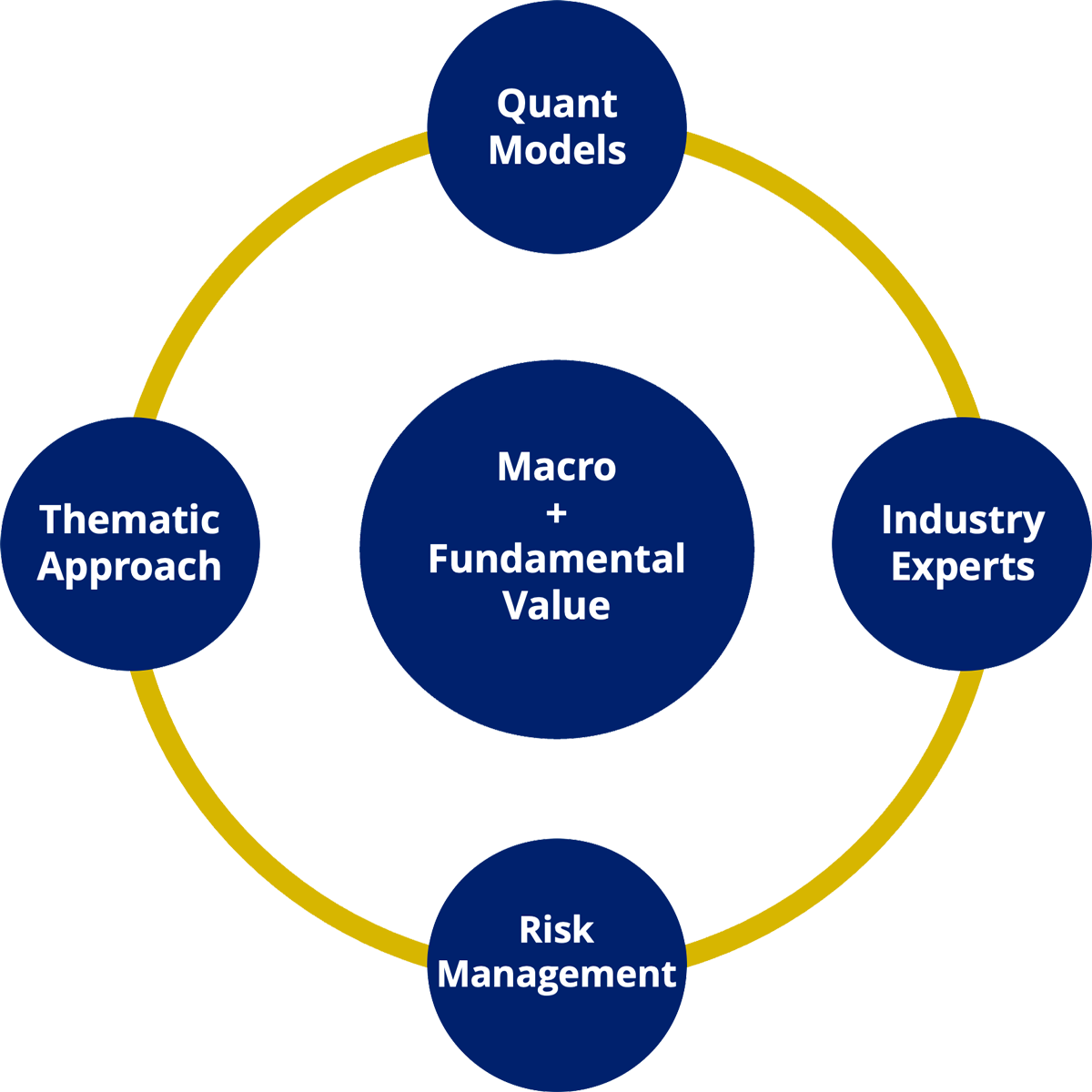
It is a Raging Bull Thesis for Crescat’s investment strategies over the next several years. Crescat employs a dynamic and reflexive investment process based on Top Down Macroeconomic Themes, Bottom-Up Data Driven Analysis, and Pro-Active Investment Execution to capitalize on and hedge against global imbalances in the markets.
The biggest risk to the Raging Bull Thesis for stocks and the economy is if market participants adjust their inflation expectations upward too rapidly. Stimulative monetary policy can only be effective when true inflation is higher than perceived inflation. For the time being, that definitively remains the case.
Crescat’s composite performance reports through November in compliance with Global Investment Performance Standards (GIPS®) are now available:
Crescat Large Cap
The Crescat Large Cap Composite was up 1.3% net of fees in November 2012 bringing its year-to-date performance up to 9.8% net of fees. Since inception in January 1999 through November 2012, the Composite is up 300.2% net of fees compared to a 48.6% for the S&P 500.
See Crescat’s latest Macroeconomic Research Letter that lays out the Resolution of the Global Debt-to-GDP Bubble and Raging Bull Investment Thesis.
Please contact us at info@crescat.net if you would like to get more information on Crescat’s investment strategies or to see a complete firm presentation.
Happy Holidays!
Sincerely,
Kevin C. Smith, CFA
Managing Partner, Chief Investment Officer
Posted: December 17, 2012 by Kevin S. (Digital Evolution, Global Debt-To-GDP Resolution, Global Fiat Currency Crisis, Nanoscale, New Energy Resources, Raging Bull Thesis, U.S. Housing Recovery)
Comments: No Comments